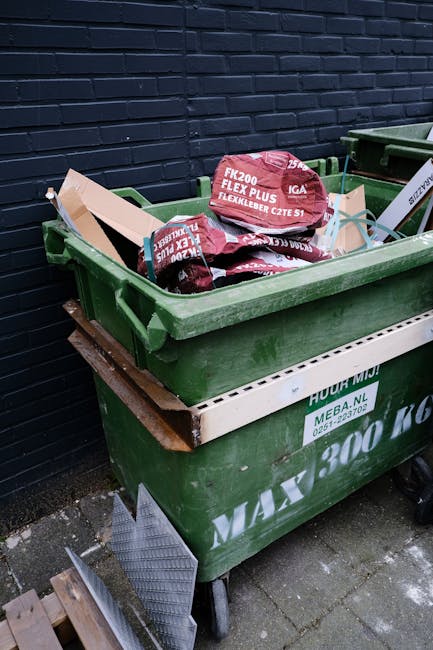
Guide to rubbish collection near Bow Church estate
If you live, work, or manage a property near Bow Church estate, rubbish can pile up faster than most people expect. A missed bin day, an awkward bit of bulky waste, or a sudden clear-out can quickly turn into a nuisance. This Guide to rubbish collection near Bow Church estate is here to make the process feel a lot more manageable. We will cover how rubbish collection works, what choices you have, what to watch out for, and how to keep things tidy without making more work for yourself.
To be fair, most people do not think about waste until it becomes urgent. One overflowing bag by the front door. A broken wardrobe in the hallway. A pile of cardboard after a move. Then the clock starts ticking. This guide walks you through the practical side of local rubbish collection so you can make a sensible decision without the usual hassle.
Why Guide to rubbish collection near Bow Church estate Matters
Rubbish collection sounds simple, but in a busy London setting it affects far more than cleanliness. Near Bow Church estate, where streets, flats, walkways, and shared entrances can get crowded quickly, waste that is left too long becomes a practical problem. It can attract pests, create smells, block access, and make a property feel poorly kept. No one wants that first thing in the morning.
It also matters because the type of waste you have changes the right approach. A few general bags are one thing. Builders' rubble, old furniture, broken appliances, or garden waste are something else entirely. If you treat all rubbish the same, you can end up overpaying, delaying the job, or handling items in a way that is not ideal. That is where a proper guide helps.
For residents, landlords, letting agents, local businesses, and anyone between moves, the real value is clarity. You need to know what needs collecting, how quickly it can be cleared, and what the safe, tidy option looks like. Simple enough in theory. In practice, it often needs a little planning.
Practical takeaway: the best rubbish collection is the one that fits the type of waste, the access at your property, and the speed you actually need. Not just the cheapest headline price.
How Guide to rubbish collection near Bow Church estate Works
Rubbish collection near Bow Church estate usually follows a straightforward pattern: identify the waste, decide whether it is general rubbish or a specialist load, arrange collection, and make sure access is ready on the day. The details matter, though. A single wrong assumption can slow everything down.
In a typical collection, the process starts with describing what needs removing. That may include bagged household waste, bulky items, office clutter, flat clearance items, garden debris, or mixed waste from a project. The clearer you are, the easier it is to match the right collection method. If you are vague, you often get vague results. Funny how that works.
From there, a few things usually shape the service:
- Waste type: household, bulky, garden, builders', office, or mixed load.
- Volume: one item, a few bags, half a van, or a full clearance.
- Access: stairs, narrow hallways, controlled entry, parking restrictions, or lift access.
- Urgency: same day, next day, scheduled, or tied to a move-out date.
- Sorting needs: items that can be reused, recycled, or separated from general waste.
For many properties around Bow Church estate, access is the hidden issue. A collection can seem easy on paper, then reality shows up: a tight stairwell, a busy entrance, or nowhere obvious to stop a vehicle. That is why planning matters. If you are arranging a collection, think about where items will be placed, how they will get out, and whether anything awkward needs dismantling first.
One more thing: collection services differ in how they handle loading, labour, and disposal. Some are ideal for quick removals from accessible spaces. Others are better when you have heavier or messier waste that needs careful handling. If you want a broader overview of removal options, the waste removal service page is a useful place to understand how a more general collection can fit your situation.
Key Benefits and Practical Advantages
The main benefit of organised rubbish collection is obvious: your space becomes usable again. But the practical advantages go beyond simply getting rid of clutter. A well-handled collection can save time, reduce stress, and stop waste from becoming a larger job later on.
- Less disruption: items leave in one go rather than sitting around for days.
- Better safety: fewer trip hazards, sharp edges, and blocked routes.
- Cleaner presentation: useful for landlords, tenants, offices, and anyone preparing a property.
- More efficient sorting: reusable and recyclable materials are easier to separate when the job is planned well.
- Reduced stress: you do not spend the weekend making repeated trips to dispose of bulky items.
There is also a psychological benefit, if we are honest. A cleared hallway or front room just feels different. Less heavy. Less nagging. You stop seeing the same old pile every time you walk past it. That may sound small, but it is one of those everyday wins people notice immediately.
For business settings near Bow Church estate, rubbish collection can also protect workflow. Old office furniture, packaging, and mixed junk can get in the way fast. A tidy clear-out helps the space look cared for and keeps teams moving without the awkward shuffle around piles of waste.
Who This Is For and When It Makes Sense
This guide is useful for a wide mix of people. Not just homeowners with too many bags, though that is common enough. You may need rubbish collection near Bow Church estate if you are:
- moving in or out of a flat or house
- clearing a rental between tenancies
- dealing with old furniture or white goods
- sorting a loft, garage, or storage area
- clearing a garden after pruning or landscaping
- removing waste after DIY or light building work
- refreshing an office or small business unit
It also makes sense when regular bin collection is not enough. Perhaps you have too much volume for domestic bins. Or maybe the waste is too bulky, too heavy, or too mixed. In those cases, waiting for the next scheduled collection is usually a false economy. You end up with more clutter and more frustration. Not ideal.
If you are unsure whether your situation is a simple tidy-up or a more involved clearance, think about the end goal. Do you just need a few items gone? Or do you need the space cleared, swept, and ready for use again? That answer usually points you to the right service level.
Residents in flats often face a different set of challenges from those in houses. Shared access, limited storage for rubbish, and the need to avoid inconveniencing neighbours all make timing important. A collection that is quick, respectful, and well-organised tends to work best in that environment.
Step-by-Step Guidance
If you want a smoother rubbish collection near Bow Church estate, a bit of structure helps. You do not need a complicated system. Just follow a sensible sequence.
- Identify the waste. Separate general rubbish, bulky items, recyclable materials, and anything that may need special handling.
- Estimate the amount. Think in bags, boxes, or item count. A rough estimate is fine, as long as it is honest.
- Check access. Note staircases, parking, lifts, restricted entry, or items that need dismantling.
- Decide the timing. Choose a date that fits your schedule and any property deadlines.
- Prepare items. Bag loose rubbish, empty drawers if needed, and keep fragile or valuable items separate.
- Ask about recycling or reuse. If items can be reused or separated, say so early.
- Confirm the handover point. Make sure the collection team knows where to park, where to load from, and who will grant access.
That final point is often underestimated. A collection can go smoothly in the morning and get messy by lunchtime simply because nobody agreed on where items would be left. A small thing, but it matters.
If you have furniture to remove, check whether it can be carried out in one piece or whether it would be easier to dismantle it first. A flat-pack wardrobe in one tight hallway can be a comical battle. One of those "why did I think this would be easy?" moments. If it is in the way, the answer is usually to break it down before collection day.
For households with a broader clear-out, it can help to group related items. For example, keep furniture together, bagged waste together, and recyclable cardboard together. That makes loading faster and often leads to a cleaner, more efficient result.
Expert Tips for Better Results
In our experience, the best rubbish collection jobs are the ones that are prepared just enough, not overcomplicated. You want the process to be smooth, not theatrical.
Here are a few practical tips that make a real difference:
- Photograph the waste first. A few clear pictures help set expectations.
- Measure oversized items. It is much easier than trying to guess later.
- Keep access clear. Shoes, prams, bikes, and random hallway clutter only slow things down.
- Separate anything reusable. If a sofa, desk, or cupboard still has life left in it, ask whether it can be handled differently.
- Be honest about mixed loads. Mixed waste can be straightforward, but only if described accurately.
Another useful habit is to plan for the last five minutes, not just the first five. What happens if the lift is busy? What if a neighbour has parked tightly by the entrance? What if you need to move a bag or two after the team arrives? A little flexibility helps keep the day calm.
Here is a small real-world observation: collections near busy estates often run smoother when the customer has already decided what is staying and what is going. Sounds obvious, but you would be surprised how often people are still sorting the pile while the collection team is waiting. That is where time slips away.
And yes, clutter has a curious way of multiplying when you are not looking. One box becomes five. Then a chair appears. Then there is a lamp. It is practically a hobby at that point.
Common Mistakes to Avoid
Rubbish collection can go wrong in small, avoidable ways. The good news is that most mistakes are easy to prevent once you know them.
- Underestimating volume: a "few bags" can turn into a full collection.
- Not checking access: narrow stairwells and parking restrictions can slow everything down.
- Mixing special items with general rubbish: some materials need different handling.
- Leaving sorting until the last minute: this creates delays and confusion.
- Forgetting about neighbours or building rules: especially relevant in shared properties.
- Assuming all waste can go together: not everything should be treated as standard rubbish.
One of the more common problems is putting heavy items at the back of the job and leaving them until the end. By then everyone is tired, the light has gone, and the awkward item suddenly feels three times heavier. Start with the difficult pieces if you can. It usually pays off.
Another mistake is choosing a collection only on price and not on suitability. The lowest figure is not always the best value if it does not cover the exact type of waste or the labour needed to move it safely.
Tools, Resources and Recommendations
You do not need much equipment to prepare for rubbish collection, but a few simple tools make the job easier and safer. A basic setup goes a long way.
| Item | Why it helps | Best used for |
|---|---|---|
| Heavy-duty rubbish bags | Reduces tearing and spill risk | Loose household waste, small clear-outs |
| Labels or masking tape | Makes sorting easier | Separating keep, recycle, and remove piles |
| Basic gloves | Protects hands from rough edges | General handling and light sorting |
| Screwdriver or small tool kit | Helps dismantle simple furniture | Wardrobes, shelves, desks |
| Handheld torch | Useful in lofts, cupboards, and dim hallways | Early-morning or low-light prep |
For larger or mixed jobs, it may be helpful to use a service page as a guide to the type of clearance you need. For example, a house clearance can suit full-property jobs, while flat clearance may be more appropriate in a smaller, access-limited setting. If the job is more specific, look at furniture clearance for bulky items or garden clearance for outdoor waste.
For customers who want a clearer idea of costs before booking, the pricing and quotes page can be a helpful starting point. And if you want to think about how waste is handled after it leaves your property, the recycling and sustainability page gives a better sense of responsible disposal priorities.
Those pages are useful because they help you match the job to the right kind of clearance rather than treating every pile of rubbish as identical. It is a small distinction, but a useful one.
Law, Compliance, Standards, or Best Practice
When rubbish collection involves domestic, commercial, or mixed waste, best practice matters. You do not need to become an expert in waste law, but you should understand the general expectations around safe handling, responsible disposal, and avoiding nuisance.
In the UK, waste should be managed in a way that reduces risk to people, property, and the environment. That usually means not dumping waste where it can block access, leak, blow away, or create a hazard. It also means being careful with items that may need special handling, such as sharp objects, electrical items, or anything contaminated.
For businesses near Bow Church estate, proper waste management is especially important. Offices, shops, and other commercial spaces may need a more regular and organised approach than a one-off household clear-out. If that sounds familiar, business waste removal and office clearance can be relevant options depending on the scale of the job.
Builders' waste is another area where the right handling matters. Heavy rubble, offcuts, plasterboard, packaging, and mixed debris are not the same as everyday rubbish. For that reason, builders waste clearance is the safer match for renovation and construction-related jobs.
Good practice also includes insurance and safety awareness. You want to know that lifting, loading, and transport are handled carefully, especially in shared properties or tight spaces. That is why it is sensible to pay attention to service standards, communication, and evidence of safe working practices. The health and safety policy and insurance and safety pages are useful signals of how a provider thinks about risk and responsibility.
Truth be told, compliance is rarely the glamorous part of rubbish collection. But it is the part that keeps the process tidy, lawful, and much less stressful. And that matters more than people realise.
Options, Methods, or Comparison Table
There are a few common ways to deal with rubbish near Bow Church estate, and each one has its place. The right option depends on the type of waste, the amount, and how quickly you need it gone.
| Method | Best for | Pros | Watch out for |
|---|---|---|---|
| Regular council-style bin disposal | Small, routine household waste | Simple for day-to-day use | Not suitable for bulky or large volumes |
| Self-managed disposal | Small loads you can move yourself | Can be flexible if you have transport | Time, labour, parking, and lifting can become awkward quickly |
| Specialist rubbish collection | Bulky, mixed, or time-sensitive waste | Fast, convenient, and handled for you | Needs accurate description and clear access |
| Full property clearance | Moves, probate, end-of-tenancy, or major declutter | Efficient for larger jobs | Requires planning and room-by-room sorting |
For furniture-heavy jobs, furniture disposal may be the more fitting route than treating everything as mixed rubbish. For bigger property clear-outs, home clearance, loft clearance, or garage clearance can save a lot of time and back-and-forth.
There is also a practical difference between clearance services and a simple uplift. Clearance tends to suit larger, more complex jobs where sorting and removal are part of the work. Uplift-style collection is often better when the waste is already ready to go. If you are torn between the two, think about how much prep you are willing to do yourself.
Case Study or Real-World Example
Here is a realistic example. A resident near Bow Church estate had a small flat that needed clearing before a tenancy handover. The job included a broken bed frame, two chairs, a handful of bin bags, flat-pack packaging, and a couple of awkward boxes from the top of a wardrobe.
At first glance, it looked like a simple collection. But the flat had a narrow hallway, shared access, and limited space to stage items. If the waste had been left scattered around, the job would have taken longer and caused more disruption.
The better approach was straightforward: items were grouped by type, the bed frame was checked for easy dismantling, the bags were tied securely, and the route to the door was cleared before collection day. Nothing fancy. Just sensible preparation. The result was quicker loading, less stress, and a much tidier end point.
That kind of job comes up a lot around mixed residential properties. The actual rubbish was not the hard part. It was the access, timing, and organisation. That is usually the real story.
Practical Checklist
Use this checklist before arranging rubbish collection near Bow Church estate:
- List everything that needs removing
- Separate bulky items from bagged waste
- Check whether anything can be reused or recycled
- Measure large pieces of furniture
- Confirm stairs, lift access, and parking limitations
- Decide whether the job is a clearance, a removal, or a mixed load
- Take a few photos if the pile is hard to describe
- Clear the route from the property to the exit
- Put fragile or valuable items aside
- Make sure someone can grant access on the day
Quick reminder: if the waste looks simple at first but feels messy once you start sorting, pause and regroup. That small delay is often what keeps the whole thing on track.
Conclusion
Rubbish collection near Bow Church estate works best when it is treated as a practical job, not a guessing game. Once you know what you are clearing, how much there is, and what access looks like, the rest becomes far easier. A good plan saves time, avoids stress, and helps make sure the waste is handled properly from start to finish.
Whether you are clearing a flat, refreshing a garden, emptying a loft, or dealing with bulky furniture, the smartest move is to match the collection method to the job. That simple step prevents the usual headaches and gives you a much cleaner result.
If you are ready to sort the problem properly, the next step is to compare your options, check the type of waste, and choose the service that fits your space and schedule. A calm, tidy finish is closer than it looks.
Get a free quote today and see how much you can save.
Frequently Asked Questions
What is the best way to arrange rubbish collection near Bow Church estate?
The best approach is to identify the waste type, estimate the amount, and check access before booking. That makes it much easier to choose the right collection method and avoid delays on the day.
Can bulky items like wardrobes and sofas be collected?
Yes, bulky items are commonly collected, but it helps to say exactly what they are. Large furniture may need dismantling, and access details matter more than people expect.
Is rubbish collection suitable for flat clearances?
Yes. Flat clearances are a common use case, especially where shared hallways, stairs, or limited storage make it difficult to manage waste yourself.
What should I do before rubbish is collected?
Sort the items, bag loose waste, clear access routes, and separate anything valuable or fragile. A little preparation saves time and reduces confusion.
Can I mix garden waste with household rubbish?
Sometimes mixed loads are possible, but it is better to describe the waste clearly from the start. Garden waste, household rubbish, and bulky items may need to be handled differently.
How do I know if I need a full clearance rather than a simple collection?
If the job involves several rooms, a large volume of items, or end-of-tenancy preparation, a full clearance may be the better fit. If it is just a few bags or items, a simpler collection may be enough.
What if my property has difficult access?
Difficult access does not automatically rule anything out, but it should be explained early. Narrow staircases, parking restrictions, and lift access can all affect timing and loading.
Are recycling and reuse considered during rubbish collection?
Often, yes. Many collections are better when reusable or recyclable items are identified in advance, because that supports more responsible handling of the waste.
How far in advance should I book rubbish collection?
That depends on urgency and availability, but it is wise not to leave it too late if you have a move-out date, a property inspection, or a renovation deadline.
What happens if I underestimate the amount of rubbish?
If the load is larger than expected, the collection may need adjusting. That is why honest estimates and a few photos are so useful. It is much better to over-clarify than understate the job.
Is there a difference between waste removal and rubbish collection?
Yes, sometimes. Rubbish collection can imply a simpler uplift, while waste removal often covers a broader set of services, including heavier or more varied loads. In practice, the terms can overlap, so the exact service description matters.
What should I look for in a provider?
Look for clear communication, sensible pricing, safety awareness, and a service that matches the type of waste you have. A provider that asks the right questions early usually saves you trouble later.