Garden Clearance in Bow

Garden clearance in Bow should make it easier to reclaim outdoor space without turning the job into a drawn-out disruption. We handle practical clearance work for overgrown borders, unwanted cuttings, old timber, broken garden items and mixed green waste, with a clear focus on tidy removal and sensible sorting. If you are getting a garden ready for replanting, tidying a rental property or dealing with a patch that has been left to build up, the aim is straightforward: clear the area in a careful, organised way.
Our service covers a broad range of outdoor clearance tasks, including seasonal cut-backs, removal of collapsed plant material and the collection of items that do not belong in the garden anymore. Where a job includes mixed contents, we separate what can be reused or recycled from what needs disposal, keeping the process practical rather than overcomplicated. That approach suits courtyards, back gardens and shared outdoor spaces where access, neighbours and finish quality all matter.
Use the main pages on this site to explore related services if your job also involves other kinds of waste or property contents. When you are ready to compare options and request a price, send over the relevant details and ask for a quotation.
Garden clearance for overgrowth, cuttings and awkward debris
A typical clearance starts with the material you can see at a glance: hedge trimmings, stray branches, leaves, weeds and other green waste that has built up over time. We also deal with awkward debris that is still technically outdoors but no longer belongs in the garden, such as damaged planters, shattered fencing sections, cracked pots and redundant edging. The service is designed to restore order rather than replace gardening work, so it is a good fit when the space needs a clean reset before any further improvement.
In practice, the work can involve lifting, loading and removing items from beds, paths and hardstanding areas, then leaving the site tidy enough for follow-on work by you or another trade. If there are thorny clippings, soil-heavy roots or damp organic materials, those are handled as part of the same clearance rather than treated as separate problems. For many customers, the key outcome is not simply taking things away; it is opening up the garden so it can be used properly again.
For straightforward enquiries, a short description of the items and the access route is usually enough to begin. If the job includes mixed materials, let us know whether there are any items you want kept aside, because that helps shape the quote. You can also check the pricing and quotes page if you want to understand how estimates are usually prepared before you get in touch.
What can be cleared from a garden

Garden clearance is often broader than simple green waste removal. A lot of outdoor spaces collect household leftovers over time: old toys, storage tubs, torn furniture, broken ornaments, plant supports, rusting tools and other items that no longer have a useful place outside. We can clear these alongside the garden waste itself, so the work is handled as one organised removal rather than several separate jobs. That matters when the garden has become a catch-all area and the path to usable space is no longer obvious.
We also handle items that are more stubborn to move, such as damp bags of cuttings, heavy pots with soil still inside, collapsed compost containers or uneven stacks of timber. In some gardens, the challenge is not volume but layout: narrow side access, steps, tight corners and fragile surfaces all change how the work needs to be done. A good clearance plan takes account of those practical issues before removal begins, so the job stays controlled from start to finish.
When you want a fuller picture of how a mixed-property job is approached, the home clearance page can help if the outdoor work is part of a larger property clean-up. If your enquiry is more focused on outdoor waste only, keep the description simple and direct, and we can shape the quotation around the specific material you want removed.
Planning the work around access and site conditions
Clearance work is easier to manage when access details are understood in advance. That might mean a side passage, shared driveway, rear alley or another route to the garden itself. It can also mean noting whether the area contains steps, narrow gates or soft ground that makes wheelbarrows or carrying loads more awkward. These are practical considerations rather than problems, and they help define the most efficient way to clear the site without unnecessary handling.
The condition of the garden also shapes the work. Wet cuttings are heavier than dry ones, a tangle of brambles behaves differently from a pile of leaves, and mixed waste sometimes needs more sorting than a single-material load. Rather than treating every job as the same, we look at the actual contents and how they are arranged. That makes it easier to give a quotation that reflects the work involved instead of relying on a vague estimate.
If your garden clearance includes old fixtures or broken outdoor furniture, it may be useful to browse the furniture clearance page as well, especially when the job overlaps with seating, tables or storage items kept outside. For quotes, the most helpful starting point is still a clear description of what needs removing and how it can be reached.
Green waste, soil and mixed outdoor loads

Many garden clearances contain a combination of green waste and heavier outdoor debris. Leaves, clippings and small branches are straightforward enough, but once soil, turf offcuts, root balls or damp compost are added, the load becomes more labour-intensive. We treat those materials carefully and sort them with disposal in mind, rather than bundling everything together and hoping for the best. That approach is useful when a garden has been dug over, neglected or left after a landscaping change.
Mixed outdoor loads can also include bags that have been filled over time and then forgotten, or collections of surplus materials left after DIY work in the garden. Old membrane, offcuts of timber, broken edging and damaged containers often sit alongside organic waste, and the result is a job that needs both lifting and sorting. By separating what can be recycled from what must be disposed of, the service stays efficient and responsible without overpromising on any specific route for each item.
For larger mixed jobs, it helps to identify anything that should be left in place, such as compost, tools or planters you want to keep. That simple note saves time later and keeps the quotation focused on the actual clearance. If you are comparing options across more than one area of the property, the garden clearance service page gives a useful starting point for the outdoor scope.
Garden clearance for homes, landlords and managing agents
Outdoor clearances are often requested for private homes, but they are equally relevant to landlords, letting agents and managing agents who need a garden brought back under control. Vacant or poorly maintained outdoor spaces can accumulate waste quickly, and the job can involve a mix of garden debris and left-behind domestic items. We work on the clearance itself, taking the practical side seriously so the outdoor area is left in a better state for inspection, maintenance or new occupancy.
Where the space forms part of a wider property handover, the job may need to be handled in stages. A front garden, rear yard or shared courtyard might contain different types of material, and not everything needs the same treatment. Some areas need careful separation of reusable items, while others need a clean sweep to remove organic growth and general waste. The service is flexible enough to deal with that variation without turning the job into unnecessary paperwork or complicated sequencing.
If the property includes indoor contents as well as outdoor waste, you may find the house clearance page helpful for understanding the wider removal services available. When you are ready to ask for a price, a concise description of the garden size, access and material type is the best place to start.
Before and after: how a garden clearance changes the space
The value of a garden clearance is often clearest when the space has become difficult to use. Paths that were once open can disappear under growth, storage items can take over corners, and discarded materials can make even a modest garden feel crowded. Clearing those items away creates a more workable layout, making it easier to see what remains, what can be repaired and what can be replanted. It is a practical reset rather than a decorative treatment.
Customers often use the service when they want to prepare for another stage of work, such as pruning, turfing, planting or simple tidying. In those cases, the removal job needs to respect what comes next, leaving beds, borders and hardstanding accessible instead of damaged by rushed handling. That is why it helps to separate clearance from follow-on work: one task opens the space, while the next task improves it further. Both matter, but they are not the same thing.
For outdoor projects that also involve old sheds, garage overflow or general stored items, the garage clearance page is worth a look if the unwanted material has spread beyond the garden itself. Send the details that matter most and ask for a quotation when you are ready.
About Bow
Bow is an east London district in the London Borough of Tower Hamlets, close to Stratford, Bromley-by-Bow and the River Lea corridor. Its name is commonly linked to the historic Bow Bridge, a medieval crossing over the River Lea that gave the area its identity. The district lies within a landscape shaped by waterways, transport routes and long-term urban change, and it sits near several parts of the Lower Lea Valley that were transformed by industrial growth, later redevelopment and the 2012 Olympic legacy. The area has a strong sense of layers: older streets and terraces sit alongside newer housing, transport infrastructure and open spaces that reflect different periods of growth. Bow Church, a longstanding local landmark, stands as part of the area’s historic fabric, while nearby Mile End Park and Victoria Park connect Bow to larger green corridors within inner east London. Roman Road remains one of the best-known street patterns associated with the district, and its market culture has helped sustain everyday activity across successive generations. Bow also has links to East End social history, including workers’ movements, housing change and the shifting character of riverside industry. Today it is read through a mix of residential neighbourhoods, transport connections and visible reminders of its older route-based origins. That combination of history, movement and rebuilding gives Bow a character that is both practical and distinctive, with local identity shaped as much by geography as by architecture and community life.
Sorted removal, recycling and responsible disposal
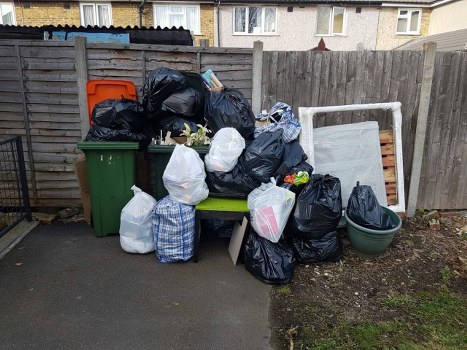
Responsible garden clearance is not only about collecting waste; it is also about choosing what happens to each type of material afterwards. Green waste, timber, metal fixtures and mixed outdoor debris may need different handling, and a sensible approach keeps the process orderly. We sort items where practical and aim to keep recyclable material separate from general waste. That way, the job remains efficient while still taking the contents seriously instead of treating every load as if it were identical.
There are limits to what a clearance can change, and it is better to be clear about them. Some materials may be too mixed, contaminated or awkwardly packed to separate fully on site, while others may need to be treated according to their own disposal rules. Even so, the basic aim remains the same: remove the clutter, handle the load carefully and avoid unnecessary damage to the remaining garden. A clear quotation should reflect that work honestly, without overstating what can be recovered or reused.
Where your outdoor clearance forms part of a larger waste project, the waste removal page gives a broader view of the general service framework. If you are comparing how specific materials are handled, take a moment to review the recycling and sustainability page as well, then ask for a quotation when you are ready to proceed.
How to request a quotation for garden clearance
A useful quotation begins with a clear description of what needs to go. For garden clearance, that usually means noting the main material type, the approximate quantity and any access points that affect carrying or loading. If there are items you want retained, set those apart in your description so they are not counted as waste. This is not about making the process formal; it is about keeping the estimate aligned with the real job from the outset.
When the garden contains a mix of cuttings, broken items and heavier debris, photographs can be helpful because they show how the space is arranged, not just what is there. A short note about gates, steps or shared access is useful too. Those practical details help shape a quotation that is realistic and fair, while also showing whether the work is straightforward clearance or a more involved mixed load. If you prefer to compare the financial side first, the pricing page is available through the site navigation.
Request a quotation when you are ready and include the main items, access details and any important limitations. For a final check on related outdoor services, the furniture disposal page is helpful if seating, tables or other unwanted pieces are part of the same job. The more precisely the job is described, the easier it is to respond with a quotation that matches the work.
Helpful ways to prepare the site before clearance

Before a garden clearance takes place, a few simple steps can make the work smoother without turning preparation into a project of its own. If there are hoses, ornaments, tools or planters you intend to keep, move them aside where possible so they are easy to identify. Try to give a clear path to the main waste, especially if the garden is narrow or split into sections. These practical preparations help reduce handling time and lower the chance of items being mistaken for rubbish.
It also helps to decide in advance whether the job is limited to the outdoor area or whether you want items from a nearby shed, side return or storage corner included. That distinction matters because it changes the scope of the work, the materials involved and the amount of sorting required. Clear instructions lead to a more accurate quotation and a cleaner result, especially when the garden has accumulated a mix of organic waste and domestic clutter over time.
If the clearance includes bulky items as well as garden waste, make a note of anything especially heavy or difficult to reach. We can then plan the removal in a way that fits the site instead of forcing a one-size-fits-all approach. You can also review the contact us page when you are ready to send the details and ask for a quotation.